Place of Origin:
China
Brand Name:
hengyang
Certification:
ISO9001
Model Number:
cement
Document:
1) Waste should be avoided. To a certain extent it is possible to avoid general household waste, however "municipal sewage sludge" cannot be "avoided", as required by this guideline.
2) If waste cannot be avoided, the priority should be to utilise the substances it contains. In the case of municipal sewage sludge, the only practical uses are in the agricultural sector - as organic fertiliser to improve the soil and for recultivation. If municipal sewage sludge is to be used in this sector
however, it must meet the following two criteria:
· The sludge must meet the minimum requirements for agricultural use, i.e. in practical terms the heavy metal concentrations and also the organic pollutants, such as dioxines and furanes, must not exceed certain maximum levels.
· A market should be available for the "organic fertiliser", i.e. there must be a demand for the substance in the immediate vicinity or a demand must be created for it. The main criterion here is that this demand be long-term, thus ensuring that there is a means of disposal available for the waste. Those who know what havoc can be caused by false information being propagated on television or in the newspapers will hardly expect to
find a "reliable long-term solution".
If a truly safe means of disposal by utilisation is to be found, the best possible scenario can only be a combination of "material utilisation" for as long as possible and "thermal use", as required in the next step described below.
3) If the "material utilisation" described above is not possible, the law requires "thermal use". This does not mean that the organic waste should be destroyed by heat, but that it should be processed to make solid fuel and then used in place of a primary energy source. The idea behind this regulation is to reduce CO2 emissions.
4) The final stage for organic waste is dumping, but not until the organic content has been reduced to less than 5%, which is generally when it has been well incinerated. When dealing with municipal sewage sludge, the regulations clearly require that the sludge be dried after dewatering. Relatively safe use in agriculture and also proper thermal use is only possible if the sludge has been dried, normally to a dry solids content of 90 to 95%.
![]()
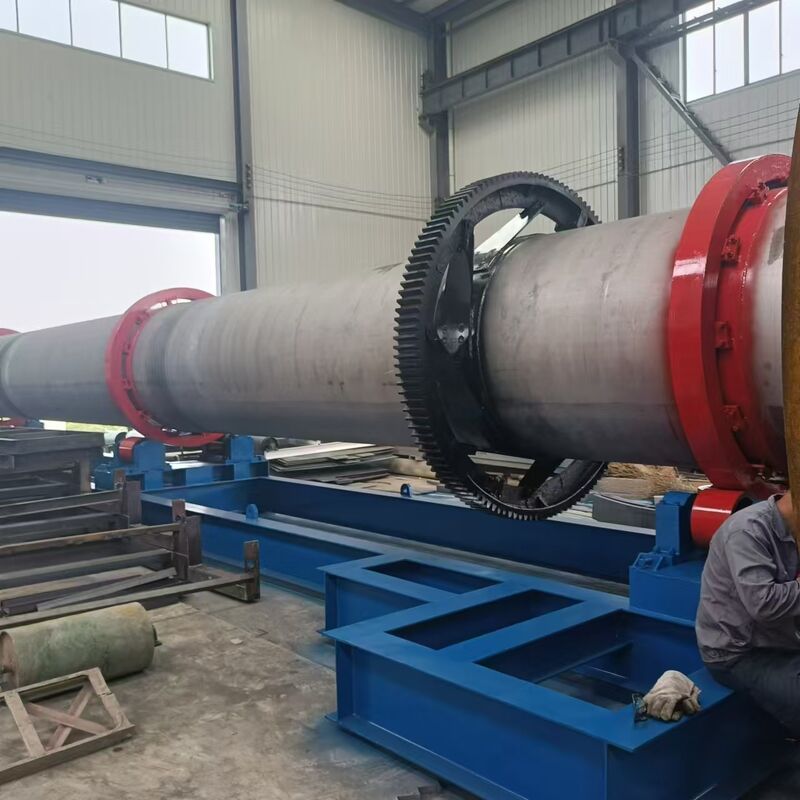
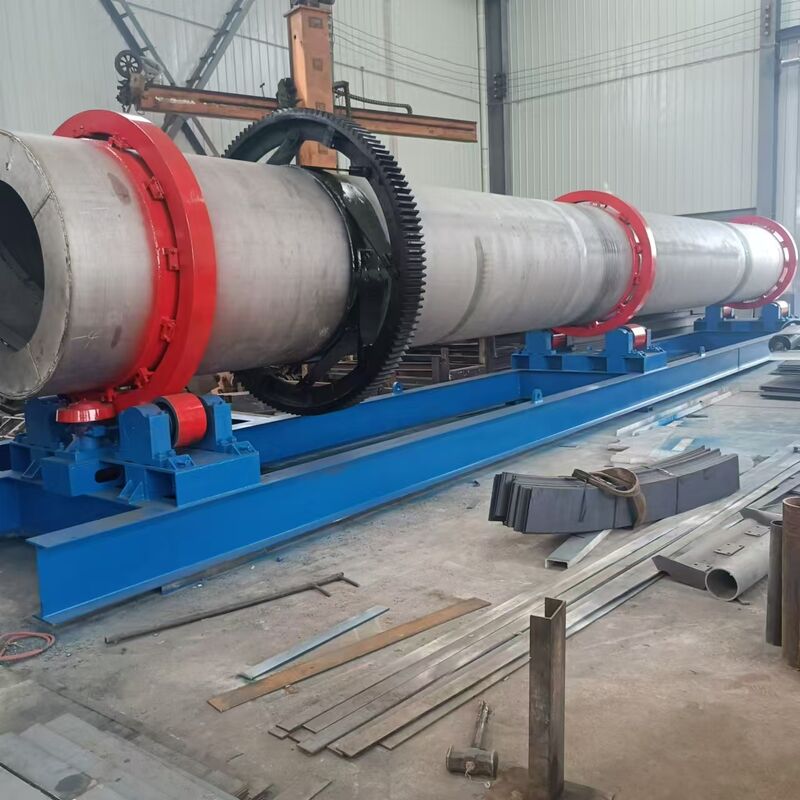
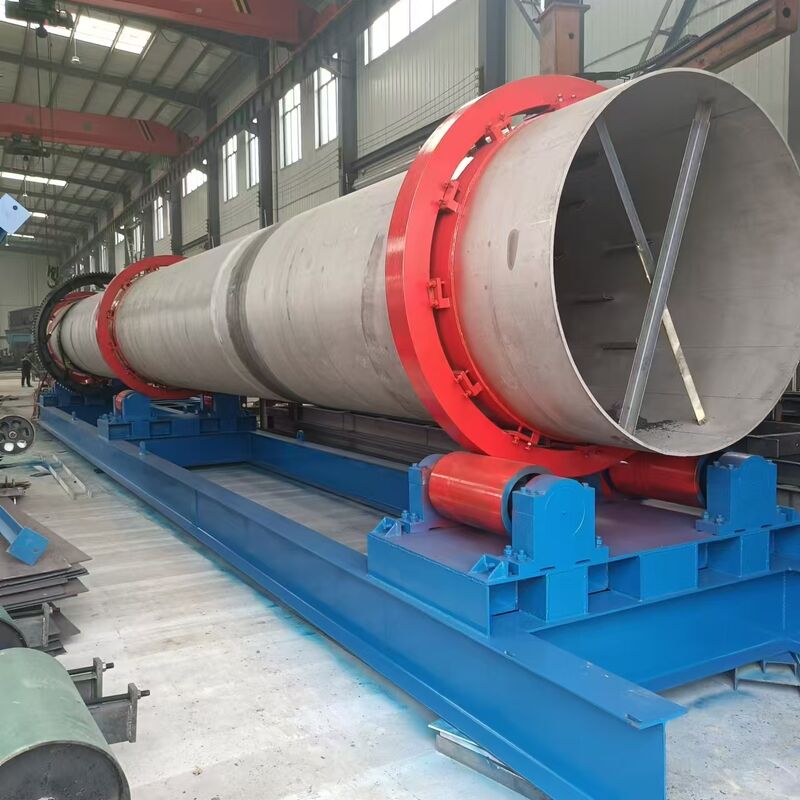
Technical performance of Solid waste drying machine for sale:
|
Size(m) |
Capacity(t/d) |
Inclination(%) |
Supports(pc) |
Damper Type |
Kiln Rotation Speed |
Main Drive |
Auxiliary Drive |
|||
|
Main Drive(r/m) |
Auxiliary Drive(r/m) |
Motor Power(KW) |
Reducer (Overall Ratio) |
Motor Power (KW) |
Reducer (Overall Ratio) |
|||||
|
φ2.8/2.5×44 |
300 |
3.5 |
3 |
Mechanical |
0.445-2.22 |
4.75 |
55 |
49-63 |
4 |
40.44 |
|
φ3×48 |
600-700 |
3.5 |
3 |
Mechanical/ Hydraulic |
0.676-3.38 |
9.36 |
100 |
50 |
7.5 |
14 |
|
φ3.2×50 |
1000 |
3.5 |
3 |
Hydraulic |
0.36-3.57 |
6.5 |
160 |
40 |
15 |
31.5 |
|
φ3.3×50 |
1200 |
4 |
3 |
Hydraulic |
0.36-3.57 |
5.61 |
160 |
40 |
11 |
31.5 |
|
φ3.5×54 |
1500-1800 |
4 |
3 |
Hydraulic |
0.39-3.9 |
7.66 |
220 |
28 |
18.5 |
45 |
|
φ4×60 |
2500 |
4 |
3 |
Hydraulic |
0.41-4.07 |
8.2 |
315 |
22.4 |
22 |
45 |
|
φ4.3×64 |
3500 |
4 |
3 |
Hydraulic |
0.4-4.0 |
7.93 |
400 |
31.5 |
30 |
45 |
|
φ4.8×74 |
5000 |
4 |
3 |
Hydraulic |
0.35-4 |
8.52 |
630 |
42.226 |
55 |
28 |
|
φ5.0×74 |
6000 |
4 |
3 |
Hydraulic |
0.35-4 |
7.58 |
710 |
28 |
55 |
45 |
|
φ5.6×87 |
8000 |
4 |
3 |
Hydraulic |
Max4.23 |
8.7 |
800 |
23.901 |
90 |
35.795 |
|
φ6.0×95 |
10000 |
4 |
3 |
Hydraulic |
Max5 |
9.2 |
950×2 |
26.646 |
132 |
35.795 |
Send your inquiry directly to us